
Feng Shui Classroom
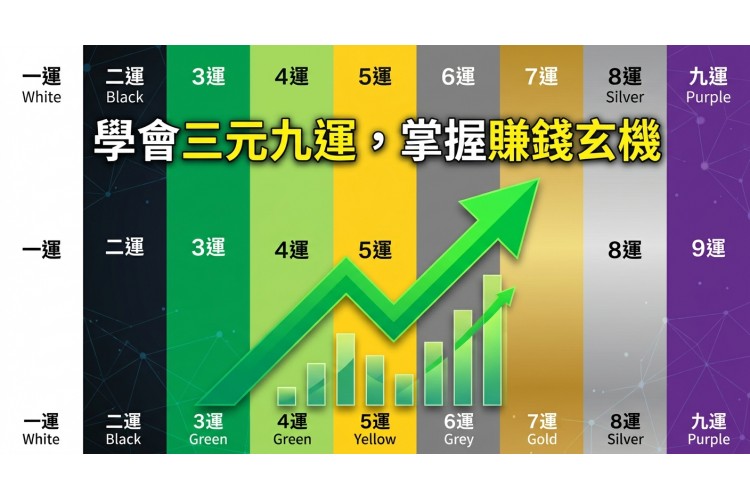
The Three Cycles and Nine Periods (San Yuan Jiu Yun) is a traditional Chinese metaphysical system for observing the fortune of major eras. Each Period lasts 20 years, while the nine Periods together span 180 years. Each Period has a different Five Element attribute, corresponding to different social trends, industry cycles, and wealth opportunities. This article uses historical cycles, the Fire-element characteristics of Period 9, and long-term investment thinking to analyse how to position yourself with the times and master your own wealth rhythm.
If you have been working hard but still feel that your wealth is accumulating unusually slowly, or if you want to invest but do not know whether to look at property, buy stocks, or research technology and AI, today’s lesson on the Three Cycles and Nine Periods will give you a completely new long-cycle thinking framework.
What Are the Three Cycles and Nine Periods?
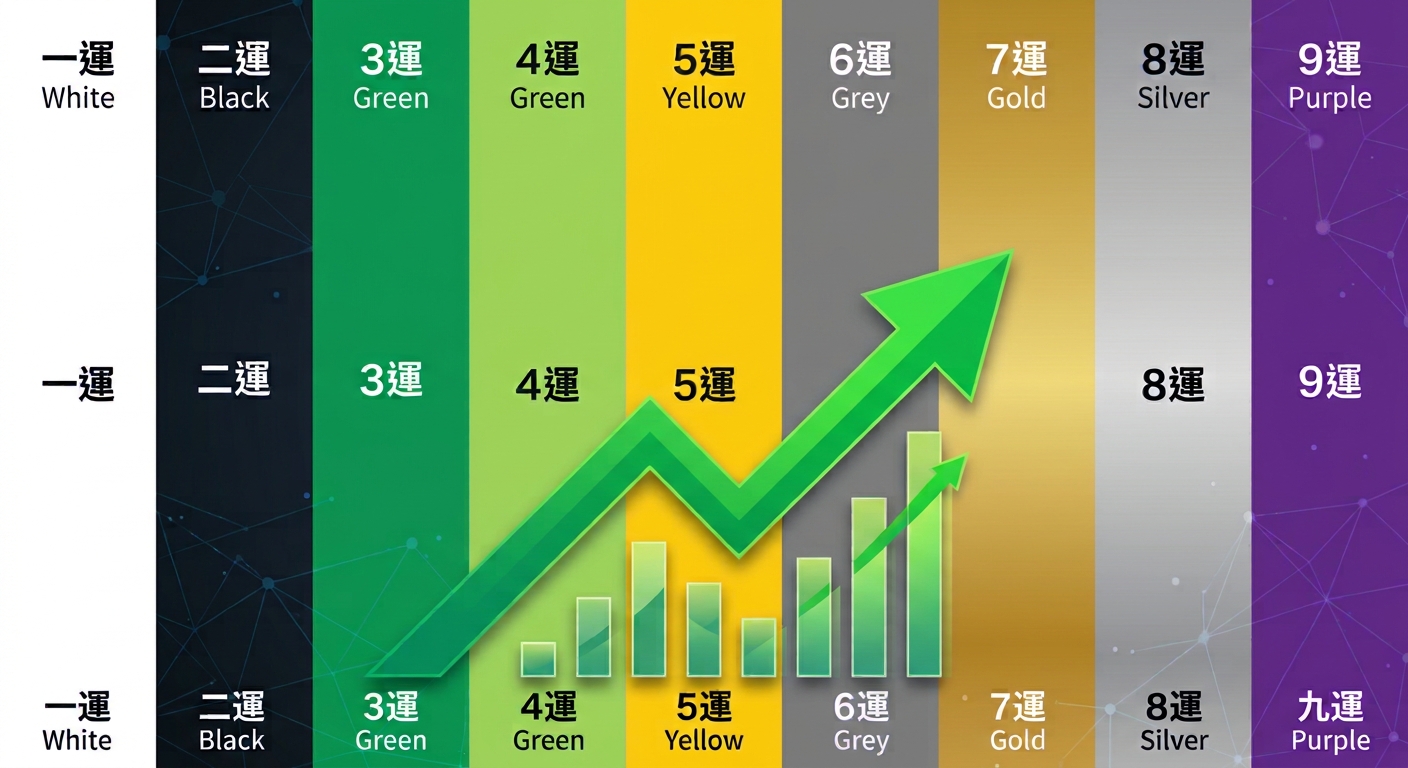
The Three Cycles and Nine Periods divide time into nine major Periods. Each Period represents 20 years, and the nine Periods together span 180 years. Each Period has a different Five Element attribute—such as Water, Wood, Fire, Earth, or Metal—symbolising shifts in cosmic energy, social themes, and even historical cycles across different eras.
People often say that “history repeats itself.” From the perspective of the Three Cycles and Nine Periods, this does have some logic. Each major Period brings similar Five Element energies and social phenomena; however, because society continues to advance, the specific development of each cycle will never be exactly the same.
The Three Cycles and Nine Periods are not about superstition; they are a form of long-cycle thinking: observing the bigger picture, identifying trends, imagining what the world may look like 20 years from now, and preparing in advance.
The Previous Period 9: 1844–1863
The previous Period 9 was 1844 to 1863. It was governed by the Nine Purple Fire Star, with the Fire element. Its fortune was mixed, carrying a strong sense of turbulence. This Period can be summarised as “imperial systems under strain, civil war, and the spread of revolution.”
- China: After the Opium Wars, the system of unequal treaties continued to expand. The Taiping Rebellion from 1850 to 1864 further plunged the Qing court into large-scale upheaval.
- Europe: The revolutions of 1848 swept across many countries. Although most failed, they helped spread nationalism and constitutional thought. The Crimean War also reshaped the European balance of power.
- United States: The American Civil War broke out in 1861, and the Emancipation Proclamation in 1863 pushed the issue of slavery into the global spotlight.
The keywords of the previous Period 9 were: Fire, conflict, transformation, and turbulence.
Periods 1 to 8: The Context of Major Eras
To understand Period 9, we cannot only look at the present. By reviewing the previous major Periods, you will better understand the cyclical logic of the Three Cycles and Nine Periods.
Period 1: 1864–1883, Water
Period 1 belongs to Water and is generally regarded as auspicious, representing steady progress. During this time, China launched the Self-Strengthening Movement, Japan underwent the Meiji Restoration, and the world entered an era of railways, telegraphs, steamships, and heavy-industry expansion.
Water governs movement, transport, trade, and connection. This Period marked the early stage of the world becoming increasingly interconnected.
Period 2: 1884–1903, Earth
Period 2 belongs to Earth but is considered inauspicious, representing conflict. It was the peak of imperialism, when major powers carved up spheres of influence and national consciousness began to awaken. China experienced defeat in the First Sino-Japanese War, expanding foreign influence, and the turmoil following the Boxer Rebellion.
Earth naturally governs stability, land, and resources; but when Earth energy becomes unbalanced, it can easily turn into territorial disputes, resource struggles, and power conflicts.
Period 3: 1904–1923, Wood
Period 3 belongs to Wood and is considered inauspicious, governing war and upheaval. The Qing Empire came to an end, and China entered an era of republicanism alongside warlord fragmentation. The First World War reshaped Europe, while the Russian Revolution pushed ideological conflict to a new level.
Wood governs growth, expansion, and new forces; but when the old order cannot accommodate new forces, revolution, war, and institutional restructuring become more likely.
Period 4: 1924–1943, Wood
Period 4 also belongs to Wood, but its fortune leans inauspicious, governing disputes and war. The Great Depression, the rise of fascism and Nazism, the War of Resistance against Japan, and the Second World War all made this an era of intense opposition and total mobilisation.
Period 5: 1944–1963, Earth
Period 5 belongs to Earth, with mixed fortune, and its core theme was reconstruction. After the Second World War, the world entered the Cold War era; many countries in Asia and Africa began decolonisation, while China entered a new stage of national reconstruction after 1949.
The theme of this Period was the retreat of the old imperial order and the establishment of a new bloc-based order.
Period 6: 1964–1983, Metal
Period 6 belongs to Metal and is considered auspicious, representing economic growth. It was an era of rapid development in the space race, semiconductors, and the electronics industry. Global supply chains and multinational corporations began to expand, while several Asian economies took off through export-led industrialisation.
However, China experienced ten years of turmoil during the Cultural Revolution in this Period, and only began shifting toward economic development after the reform and opening-up policy in 1978.
Period 7: 1984–2003, Metal
Period 7 belongs to Metal, with mixed fortune, representing intensifying competition. It was the era of the internet, globalisation, and a unipolar order. After the Cold War ended, international capital flows accelerated, and the spread of the internet transformed information, media, business, and society.
Around China’s accession to the WTO, global supply chains were restructured, and manufacturing and export economies underwent major transformation.
Period 8: 2004–2023, Earth
Period 8 belongs to Earth and is generally regarded as auspicious, representing a stable transition, although its later years also brought many crises. Smartphones, social media, and cloud services transformed daily life and business models; however, the financial crisis, geopolitical competition, and the pandemic also exposed the fragility of excessive financialisation and global supply chains.
Period 8 belongs to Earth, and Earth governs real estate, land, construction, and tangible assets. This is why property in Hong Kong and first-tier cities in mainland China experienced such a long upward cycle during Period 8.
Period 9 Has Arrived: The Power of Fire
It is now 2026, and we have already entered Period 9 by more than two years. Period 9 runs from 2024 to 2043, governed by the Nine Purple Right Assistant Star, with the Fire element. The power of Period 9 is already very visible.
- War and geopolitical conflict continue: Fire governs rising heat, conflict, and rapid change. The international situation remains full of uncertainty.
- Fire-related industries continue to thrive: Technology, AI, electric vehicles, new energy, semiconductors, virtual industries, and internet platforms all share traits of speed, strong dissemination, and dependence on electricity and data.
- Real estate enters an adjustment phase: The property market that thrived during Period 8 is now adjusting rapidly. The old model of accumulating wealth quickly through land and property is no longer as easy as before.
Period 9 does not mean that “strong Fire energy automatically makes money.” The key is to recognise which old models are fading and which new industries are taking over.
How to Make Money by Understanding the Periods?
After understanding the Three Cycles and Nine Periods, how can you apply them to wealth planning? The following five principles are worth remembering.
1. Value Long-Term Investing
Making money work for you is often the most effective way to build wealth, but investing is not speculation. The Three Cycles and Nine Periods look at 20-year cycles, so financial planning should also adopt a long-term mindset.
You can conduct a major review and adjustment every ten years, rather than chasing news, tips, or short-term trades every day. Short-term markets are noisy, but the industry direction of a major Period often takes several years—or even a decade—to fully reveal itself.
2. Position Early for the Next Period
Those who truly understand how to use Period cycles often begin positioning for the opportunities of the next Period during the later stage of the previous one.
For example, as Period 7 was coming to an end, after the financial crisis and the sharp fall in property prices, those who could buy real estate at low levels were able to achieve very substantial returns throughout Period 8. In Hong Kong and first-tier cities in mainland China, some properties rose by three to eight times over the 20 years of Period 8.
Towards the end of Period 8, investors could gradually take profits from property and begin positioning for Fire-related industries expected to thrive in Period 9, such as the internet, electric vehicles, semiconductors, Bitcoin, and the later rise of AI. This is moving with the flow of the times.
The point is not hindsight, but this: as an old Period draws to a close, start researching the opportunities of the new Period.
3. Enter at Lows, Harvest at Highs
Stock and property markets always experience highs and lows, and the periods around a change of Period are often especially important times to pay attention.
The lesson of the Three Cycles and Nine Periods is this: do not chase prices when the market is most euphoric and everyone is talking about making money. Instead, slowly research quality assets during times of panic, correction, and neglect.
Never let FOMO drive your decisions. Rushing into the market simply because others are making money is often the beginning of buying at the top. Remember these eight words: Position at lows, harvest at highs.
4. Control Position Size and Invest in Stages
No matter how optimistic you are about a trend, you should never invest all your capital at once.
- Keep investment capital within one-third or one-quarter of your total assets.
- Retain the rest for living expenses, emergency funds, and more stable allocations.
- Invest gradually, in stages and at different price levels, rather than going all-in at once.
The hard truth of long-term investing is not about predicting the exact bottom, but about discipline, cash flow, and patience.
5. It Is Still Early in Period 9
We are still in the early stage of Period 9. If you missed the property market of Period 8, or the early opportunities in technology stocks and AI, there is no need to lose heart.
Period 9 still has a long way to go, but entering the market requires discipline. It is better to wait for market pullbacks and more reasonable valuations before considering gradual entry, rather than chasing prices when sentiment is running high.
In addition, by the middle of Period 9, you should begin paying attention to opportunities in the next Period 1. Period 1 belongs to Water and runs from 2044 to 2063. Water governs movement, transport, trade, logistics, aerospace, and water resources; related industries may become new long-term themes.
Of course, this does not mean you should invest everything today. Rather, it is a reminder: investing requires foresight. Do not wait until a trend is obvious to everyone before you begin researching it.
My Personal Investment Experience
Finally, let me share some of my own experiences for your reference.
- During the middle of Period 8, I bought a property in Zhuhai and sold it near the property-market peak at the end of Period 8, with the price more than doubling.
- At almost the same time, I invested in Tencent and sold near the end of Period 8 when the share price rose above HK$700, achieving a return of nearly ten times.
- In 2015, during the middle of Period 8, I began investing in Bitcoin. By the end of 2024, when the price approached US$100,000, I sold my entire position, also achieving a return of about ten times.
None of these were short-term trades. They were deployments spanning a decade. You do not need to watch the market every moment; the most important things are: understand the bigger trend, choose the right direction, control risk, and hold with patience.
Conclusion: Follow the Times, Stay Disciplined
The Three Cycles and Nine Periods are not a crystal ball, nor a guaranteed formula for getting rich. Their real value is to remind us that wealth has never depended on hard work alone; it also requires the ability to follow major cycles, position early, and execute with discipline.
Period 8 has passed, and Period 9 is unfolding. Fire governs technology, AI, energy, communication, and transformation; but Fire also governs turbulence, so risk management is more important than ever.
Want to Understand Period 9 Wealth Trends?
- ✦ Understand the Five Elements and industry opportunities of Period 9
- ✦ Learn long-term positioning and risk management
- ✦ Master investment thinking around Period transitions
Disclaimer: This article is shared for informational purposes only and reflects views on Feng Shui, metaphysics, and personal experience. It is not investment, financial, legal, or professional advice. The Three Cycles and Nine Periods are a traditional cultural concept and cannot guarantee investment returns. Stocks, property, cryptocurrencies, and other investments all carry risk; prices may rise or fall, and you may lose all of your principal. Readers should make independent judgments based on their own financial situation, risk tolerance, and needs, and consult licensed professionals where necessary. Past performance does not guarantee future results.
Leave a Comment