
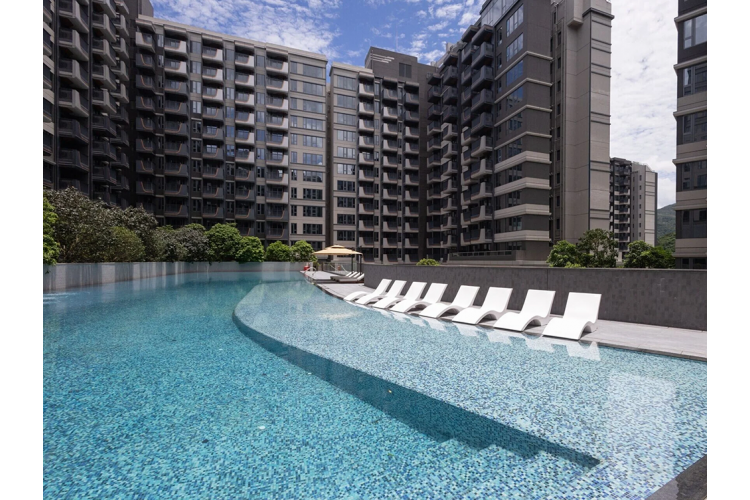
Tai Po, this land located in the eastern New Territories, has an extremely long history. It was anciently known as "Tai Po" (大步), and was only renamed "Tai Po" (大埔) during the Guangxu reign of the Qing Dynasty. According to historical records, as early as the Five Dynasties and Ten Kingdoms period, Liu Chang, the last ruler of the Southern Han, recruited three thousand people to collect pearls at Tai Po Hoi (i.e., Tolo Harbour) and established the "Meichuan Du" there. Its pearl-harvesting history continued until the Kangxi reign of the Qing Dynasty, when an imperial decree officially halted the practice. During the Song and Ming dynasties, the Tang and Man clans—two of the five great clans of the New Territories—settled in Tai Po Tau and Tai Hang, respectively. In the 11th year of Kangxi (1672), the Lung Yeuk Tau Tang clan was approved to establish "Tai Po Market"; by 1892, the Tai Hang Man clan joined forces with several Hakka villages to form the "Tai Po Seven Unions" and set up "Tai Wo Market" on the northern riverbank (now the area around Fu Shin Street). When Britain took over the New Territories in 1899, Tai Po was made the administrative centre due to its central location in the New Territories, with institutions such as the District Office established there.
In terms of modern geography, Tai Po District stretches south from Tai Po Kau to the boundary of the Chinese University, north to Pat Sin Leng, west to Tai To Yan, and east across Tolo Harbour. Its total area is approximately 148 square kilometres, making it the second-largest administrative region in Hong Kong. Currently, besides residents living in eight public housing estates and private housing complexes in Tai Po Old Market and New Market, many inhabitants are scattered across 133 villages of various sizes within the district.
Macro Tai Po Feng Shui: Convergence of Two Dragons and the Cycle of Period 9
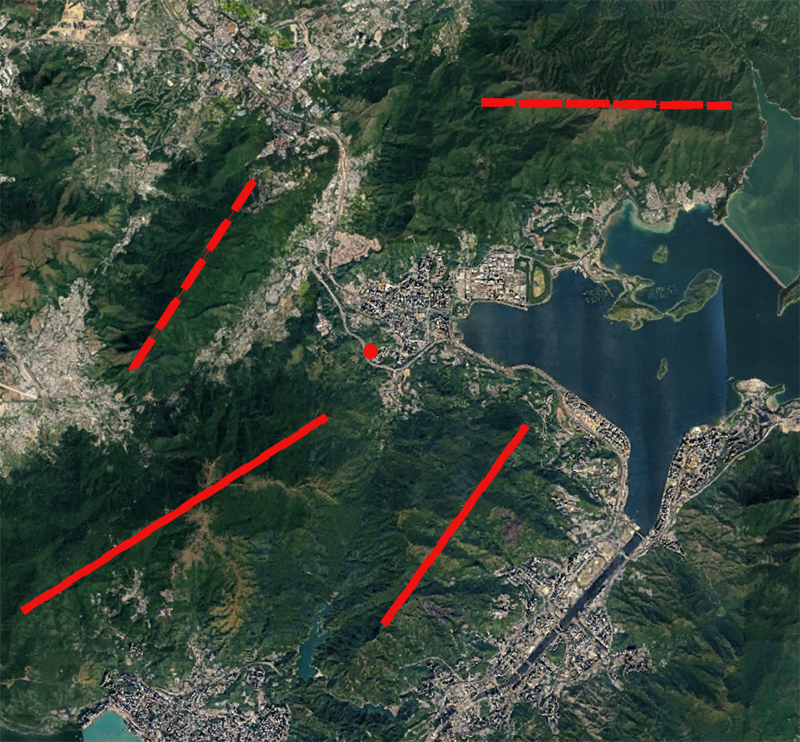
From a macro feng shui perspective, Tai Po lies at the confluence of the Pat Sin Leng dragon vein and the Tai Mo Shan dragon vein. The central area, together with Route 9, Lam Tsuen River, and Tai Po River, forms an embracing water-dragon configuration, originally an excellent "mountains encircling, waters embracing" pattern. However, since Tai Po town developed relatively early and is now comparatively aged, and with the Tai Po Industrial Area to the northeast, the qi energy in terms of liveability inevitably appears somewhat turbid.
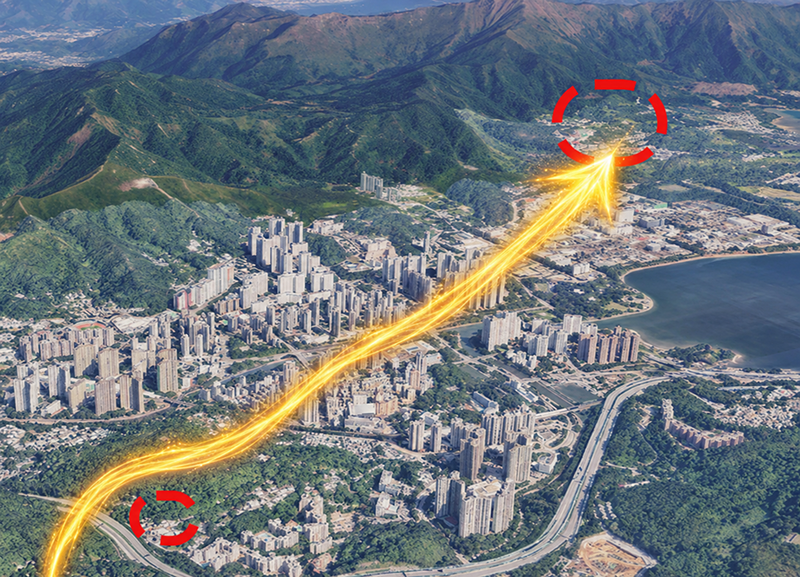
Entering "Period 9" (2024-2043), the prosperous qi shifts toward the northeast. Following the dragon vein's trajectory, the prosperous qi comes from Tai Mo Shan, passes through Tai Po Centre, flows toward Tsz Shan Monastery, and finally terminates at the Pat Sin Leng mountain range. Although past feng shui writings noted that Tai Po sits in the crook of the New Territories' "lobster" landform, it is not the true "xue" (lair). During Period 9, the genuine xue should be near Tsz Shan Monastery, around the area of the Education University.
As for the Lam Tsuen area, being situated between the two mountain ranges of Tai Mo Shan and Tai To Yan, the terrain is narrow; although dragon qi passes through, it cannot be retained. Moreover, Route 9 rapidly channels the water-dragon's strength toward Fanling and the Heung Yuen Wai Port area, meaning these two places are the direct beneficiaries instead.
Geology and Feng Shui: Plover Cove Reservoir and the Desolate Aspect of "Devil's Fist"
The mountain range extending from Tai Po's Plover Cove Reservoir toward Mirs Bay contains Hong Kong's oldest sedimentary strata—the "Bluff Head Formation" (黃竹角咀組). Here, Devonian sandstones, siltstones, and conglomerates are exposed; after prolonged folding and faulting movements throughout geological history, the exposed strata are nearly vertical.
The Bluff Head Formation features nearly vertical exposed strata and peculiar landforms, the most famous of which is the "Devil's Fist" (鬼手岩), shaped by 400 million years of seawater erosion and weathering.
However, from a feng shui standpoint, this mountain form is by no means auspicious. The rocks are exposed, the mountain body is rugged with strange formations, and it lacks vegetation and soil, presenting a desolate appearance of "bones exposed without flesh." This indirectly proves that the prosperous dragon qi cannot reach this area; the prosperous qi had already ceased before arriving at the reservoir.
Geography and Project Background of the New Development "Le Mont"
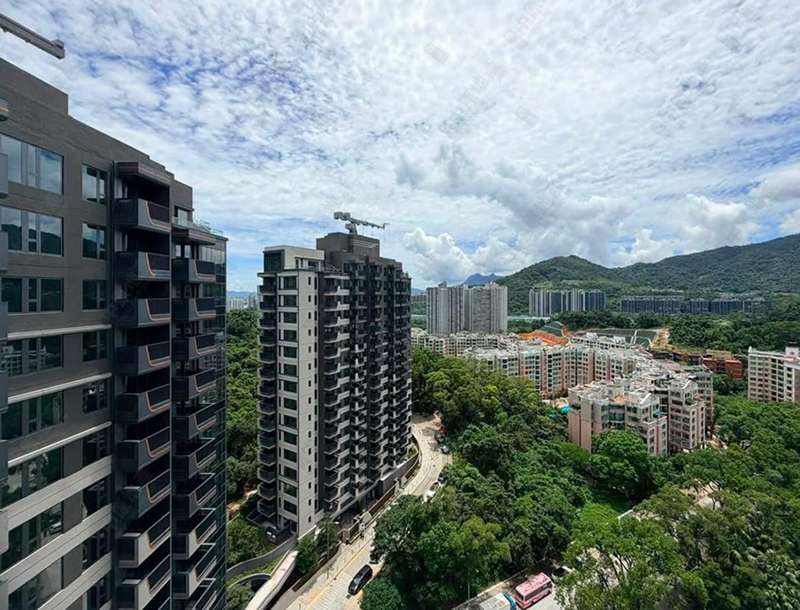
Under the above feng shui qi field, the new development at "Le Mont" (上然) at 19 Ma Wo Road has attracted market attention. The site was originally "green belt" land near Kam Shan, later acquired through joint tender by Vanke Hong Kong and Qingjian and rezoned for residential use. It covers approximately 243,357 sq ft, with a maximum permissible gross floor area of 781,911 sq ft. The developer disclosed a total investment of HK$9 billion, equivalent to a cost of HK$11,510 per sq ft. The entire project is developed in three phases, providing a total of 1,650 residential units.
However, "Le Mont" faces considerable limitations in location and amenities. The project is about 1.3 km from Tai Po MTR Station, requiring roughly a 15-minute walk. For residents relying on public transport, only one green minibus (route 20S) operates along Ma Wo Road to and from Tai Po MTR Station, with a frequency of every 12 minutes. Moreover, this minibus must also serve the large resident populations of Yu Fung Court, Novum Gardens, and The Summit, resulting in extremely heavy loads during peak hours. In addition, the government has rezoned the "To Yuen Tung" green belt beside The Summit for public housing, planning to build three public rental housing blocks up to 135 metres tall, providing 2,300 units and accommodating around 6,200 people. This may place heavy pressure on the views of some southeast-facing units at Le Mont and on surrounding transport infrastructure in future.
Three Major Feng Shui Limitations of "Le Mont": Difficulty Retaining Qi, Excessive Yin Energy, and Weak Fortune
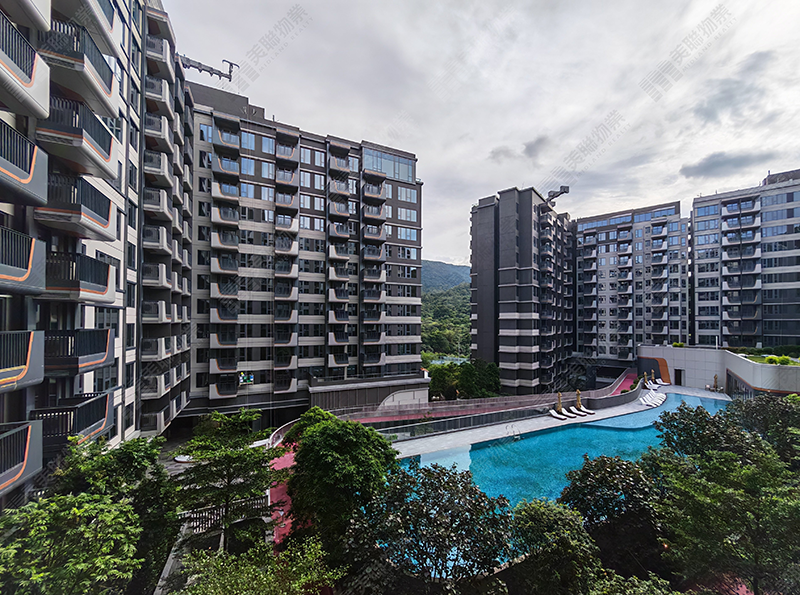
Combining macro and micro environmental factors, Le Mont's feng shui configuration has the following three critical weaknesses:
- First: Elevated terrain and proximity to highway (prosperous qi hard to retain) — The Le Mont site is on a slope, at a higher elevation than nearby projects. To the west, it sits immediately adjacent to Route 9 (Tolo Highway); speeding traffic acts like rushing water, and the resulting noise and wind sha easily disperse the qi field, causing prosperous qi to pass through but not remain.
- Second: Surrounded by ancestral graves and proximity to a columbarium hall (excessive yin energy) — Le Mont was formerly green belt land and is surrounded by numerous ancestral graves. More seriously, two graves are located directly within the estate's site (between Blocks 3 and 5), with land grant conditions requiring a road for villagers' access. Furthermore, some low-floor units are very close to "Tin Tak Shing Kau Chung Woo Ching Sai," a private facility housing about 1,900 niches; this can lead to overly heavy yin energy and unstable magnetic fields, negatively affecting residents' mental well-being and health.
- Third: Developer's fortune linkage (uncertain prospects) — In feng shui theory, a developer's qi fortune also influences the destiny of its projects. Around 2012, Vanke, Poly, China Merchants, and Gemdale were hailed as the "Big Four" mainland developers, enjoying great success. Today, however, parent company China Vanke is facing severe challenges including equity disputes, excessive debt, and default risks. Although local projects such as "Lian Fang" in Sham Shui Po or "Shang Yuan" in So Kwun Wat previously achieved respectable inspection results, the parent company's declining fortune and uncertain outlook will inevitably create subtle ripple effects on the destiny of Vanke's Hong Kong projects, placing overall pressure on the estate's qi field.
Conclusion and Buying Guide
Even so, Le Mont is one of the few brand-new, large-scale developments in the area, with extensive land coverage. There will certainly be some units with favourable orientations and mid-range heights that can skilfully avoid the ancestral graves and highway sha; therefore, it should not be judged in blanket terms. For prospective buyers, a unit's "orientation and siting" are crucial.
Looking for an Auspicious Le Mont Unit?
The orientation and floor level of each Le Mont unit greatly affect its feng shui magnetic field. Before paying a deposit, be sure to arrange an on-site assessment by a professional feng shui master to identify the golden auspicious unit that gathers wind and retains qi amid these multiple constraints!
- Confirm whether the unit faces Tolo Highway (to avoid rapid-flow wind sha)
- Assess the distance from low-floor units to ancestral graves and the columbarium hall (to guard against yin interference)
- Select mid-to-high floors with sha-avoiding views, precisely locking in auspicious qi-receiving directions
Disclaimer: The above content is for reference only. Feng Shui metaphysics is a traditional culture; please make prudent evaluations based on your personal financial condition and actual needs before making any property purchase decisions.
Leave a Comment