
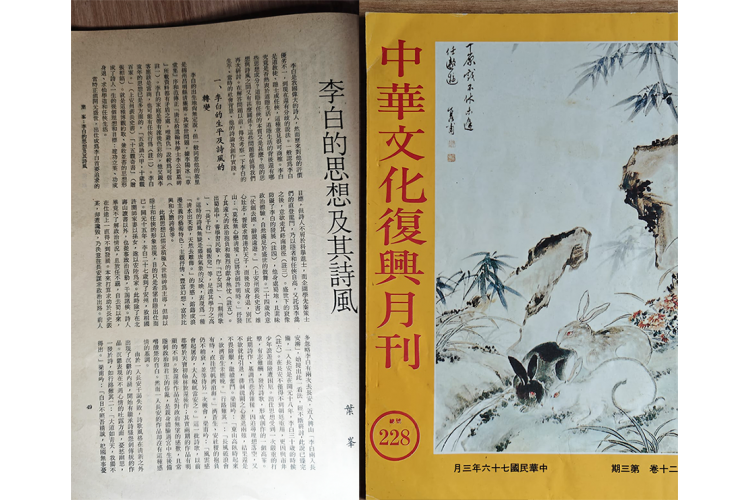
Recently, while clearing out stacks of old books that had been sitting dormant for years, my fingertips turned page after page of slightly yellowed paper until I accidentally pulled out an old publication. Opening the table of contents, I was surprised to see my own name—it was my first academic paper, published 39 years ago on the eve of my graduation in Taiwan.
Looking back at those days, technology was far from being as convenient as it is today. Writing an article then relied entirely on a pen and stacks of green manuscript paper, crafted word by word by hand. Although computers existed at the time, they were ancient 80286 models without even a Windows graphical interface. Operations relied completely on command lines; while typing in English was fairly smooth, writing Chinese papers had to be done entirely by hand.
Later, I went to London for further studies, during which I also published another paper exploring Confucian thought. Unfortunately, washed away by time, that publication was lost long ago. With a "give it a try" mindset, I searched for my name and past works on Google. Unbelievably, today's AI clearly retrieved the records of these two long-dusty papers. While marveling at the leaps and bounds of technological progress, it also felt like a dialogue across time and space with myself from 39 years ago.
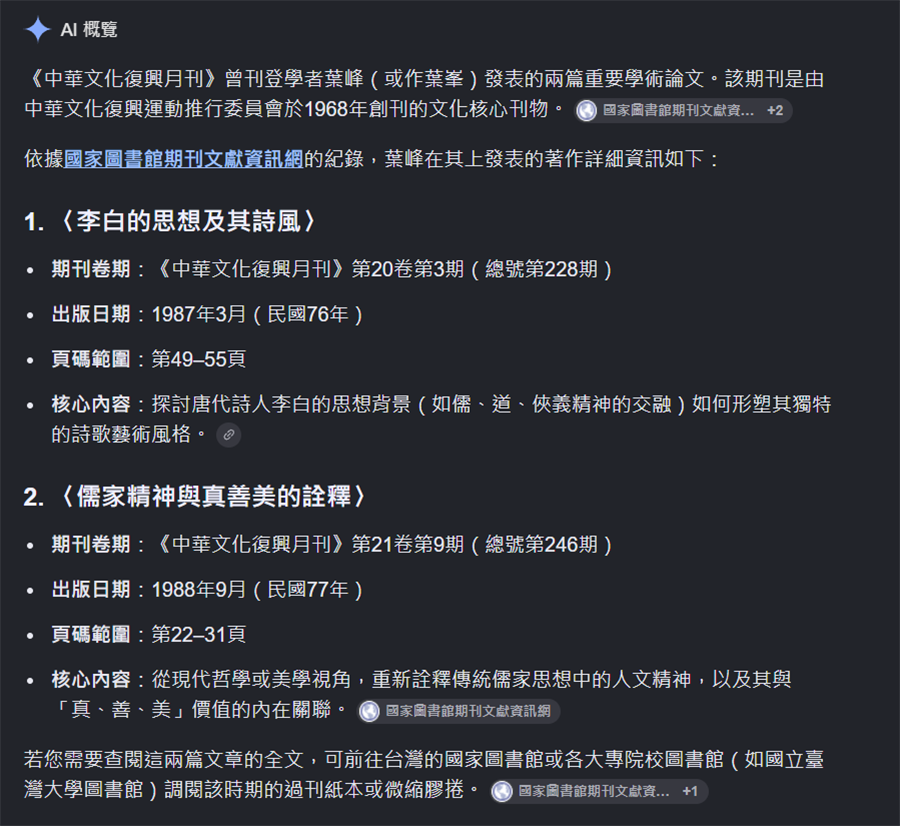
AI Search Record:
Feng Ip (Ye Feng) published several academic papers related to classical Chinese literature and Confucian thought in the prominent official Taiwan academic journal Chinese Cultural Renaissance Monthly.
According to the indexing records of the National Central Library Periodical Information Network, his main published articles include:
1. "Li Bai's Thought and His Poetic Style": Published in Chinese Cultural Renaissance Monthly, Vol. 20, No. 3 (March 1987), pp. 49-55.
2. "Confucian Spirit and the Interpretation of Truth, Goodness, and Beauty": Published in Chinese Cultural Renaissance Monthly, Vol. 21, No. 9 (September 1988), pp. 22-31.
Li Bai: The Romantic Spirit of Combining Confucianism and Daoism
Many people ask me why I chose Li Bai as my research topic back then?
In the eyes of the world, Li Bai is the "Poet Immortal" renowned through the ages, but few notice his very special religious identity. In the third year of the Tianbao era of the Tang Dynasty (744 AD), Li Bai officially received the Daoist register (i.e., took Daoist precepts to gain official qualification as a Daoist priest) at the Ziji Palace in Qizhou, becoming a genuine Daoist priest. He even described himself as having his "name recorded among the alchemists."
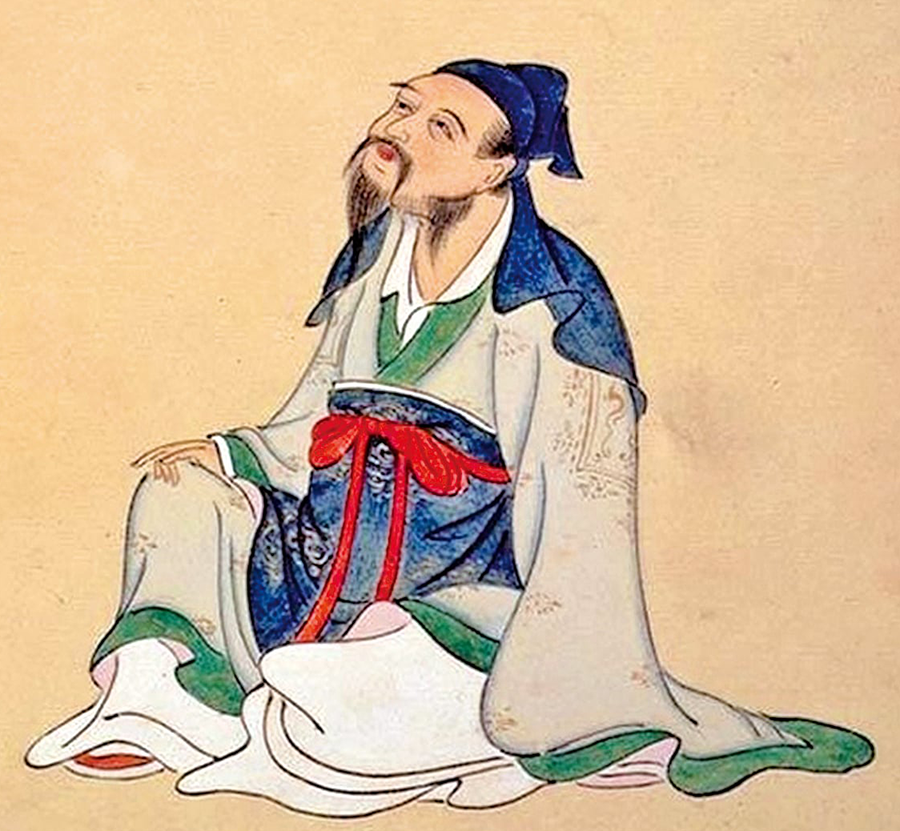
Li Bai: Embracing worldly affairs through Confucianism, seeking transcendence through Daoism
However, Li Bai was different from typical reclusive, full-time Daoist priests. Throughout his life, he harbored the secular ambition of Confucianism to "govern the country and benefit the people, then retire after success," while simultaneously using Daoist beliefs in immortals as his spiritual anchor. This ease in navigating between Confucian pragmatism and Daoist transcendence created a unique romantic poetic style. This disposition of integrating Confucianism and Daoism deeply fascinated me since my youth and became my ideal spiritual realm.
Confucian Truth, Goodness, and Beauty: The Foundation of Life
As for the other paper discussing Confucian thought, I attempted to analyze it from the philosophical perspective of "Truth, Goodness, and Beauty":
- Truth: Represents scientific verification of objective laws and the investigation of things to gain knowledge;
- Goodness: Represents moral cultivation, accumulating virtue, performing good deeds, and fulfilling social responsibility;
- Beauty: Represents "harmony between humanity and nature," the highest spiritual realm that transcends utilitarian motives.
The philosophical reflections organized in these two early papers subtly laid a solid foundation for my future life path.
Tending Toward Daoism: Feng Shui and the Microcosm
With the passage of time and personal growth, today my mindset leans more toward Daoism.
Metaphysics and Daoist thought share an inseparable connection, and over the years, I have systematically integrated these profound philosophical concepts into my Feng Shui theory:
- Science and Practice: Feng Shui is by no means blind superstition; it emphasizes scientific verification through environmental data and practical life experiences.
- The Aesthetics of Five Elements Harmony: Creating balance and aesthetic harmony in living spaces through the mutual generation and restraint of Gold, Wood, Water, Fire, and Earth.
- Mind Cultivation and Holistic Nourishment: While external environments are important, inner cultivation and peace of mind remain the fundamental core.
- Alignment between People and Environmental Energy Fields: Feng Shui is not merely about evaluating auspiciousness or inauspiciousness of geography and space, but rather a deep field energy interaction between humans and the earth.
The human body itself is a microcosm, a miniature Feng Shui system.
Our own character and inner structure determine our traits, while destiny acts as the invisible driving force guiding us onto our respective paths. From a young scholar investigating the nature of things on manuscript paper 39 years ago to a Feng Shui scholar sensing the energy fields of heaven and earth today, lingering between Confucianism and Daoism, this journey turned out to have its prelude written many years ago.
Leave a Comment