
In Hong Kong's geographical map, Yuen Long is not only the birthplace of the five major clans of the New Territories but is also regarded by feng shui masters as a precious place where "dragon veins" converge. To understand the prosperity and development of Yuen Long, we must start from the ancient "imagination of mountains and water," exploring the thousand-year-old dragon vein and the historical and geographical conditions behind it.
I. The Dragon Coming from Afar: The Momentum Beneath Tai Mo Shan
Feng shui refers to undulating mountain ranges as "dragon veins." This concept originated long ago, aiming to anthropomorphize geographical imagination by comparing the rise and fall of mountains to the flight and transformation of a divine dragon.
According to local folklore and feng shui perspectives, the "originating dragon" of Yuen Long is extremely imposing:
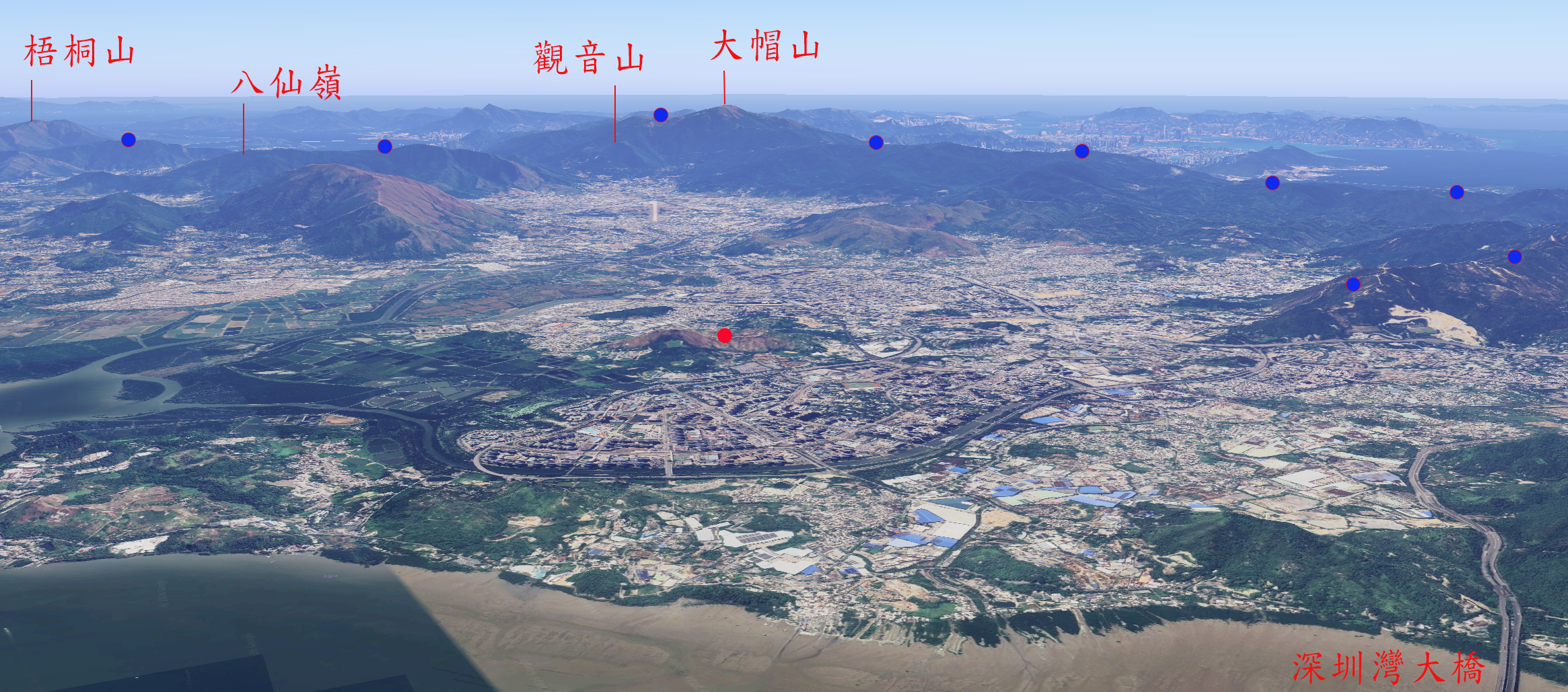
- The Source of the Dragon Vein: Originating from Wutong Mountain in Shenzhen, the mountain range extends southward, passing through Pat Sin Leng, and eventually climbing to Hong Kong's highest peak—Tai Mo Shan.
- Historical Evidence: Multiple studies mention that ancient tea plantation ruins still exist on the slopes of Tai Mo Shan and Lantau Peak, indicating that these highlands have hosted agricultural activities since ancient times.
- Entering Yuen Long: After the dragon vein converges at Tai Mo Shan, it descends, channeling energy into the Yuen Long plain. Ancient people believed that the form of the mountain range was the "substance," while its invisible spirit was the "divine." By inheriting the residual rhythm of Tai Mo Shan, Yuen Long already possesses the solidity of a "dragon body" in its form.
II. Surrounded Left and Right: The Convergence of the Pearl River's Prosperity
Feng shui places great importance on the role of water flow. It is said that "external qi gathers internal qi; passing water stops the dragon vein." Water can intercept and retain the energy of the dragon vein, preventing it from dissipating.
The layout of Yuen Long's waterways forms an ideal "dragon belly" pattern:
- Left Side (Shan Pui River, Kam Tin River): Yuen Long is adjacent to the Pearl River Estuary, where the Shan Pui and Kam Tin rivers converge. According to feng shui theory, "water flowing from both sides brings energy"; the longer the water source, the more prosperous the dragon's energy. These waterways slowly guide the prosperity of the Pearl River into Yuen Long, symbolizing the gathering of wealth.
- Right Side (Tuen Mun): Tuen Mun on the right has been a hub of the Maritime Silk Road since the Tang Dynasty. Serving as a military port and a harbor, its terrain acts like a screen guarding Yuen Long. This "mutual protection" pattern is believed in feng shui to attract air currents from the direction of Zhuhai and Macau, creating a sense of "homage and submission."
III. The Piercing of Kai Shan: The Legend of the "Jade Maiden Worshipping" Cave
A "cave" (or feng shui site) is a place where mountains and water meet, and yin and yang coalesce. In Yuen Long's feng shui legends, Kai Shan is the key location where the dragon vein from Wutong Mountain "concludes its journey."
- The Tang Clan Foundation: Historical records state that after completing his term, Northern Song dynasty scholar Tang Fu-hip, charmed by the beauty of the Tuen Mun and Kam Tin areas, moved his family there and developed the walled villages.
- Ancestral Grave Feng Shui: After moving to the area, Tang Fu-hip reburied the remains of his great-grandparents and parents there. The "Jade Maiden Worshipping" site located on Kai Shan is rumored to be the spiritual center where the dragon energy gathers. (In the image above, the red circle in the middle is the Jade Maiden Grave.)
- Spatial Imagination: The act of burying ancestors in a "dragon cave" reflects the psychological need of ancient people to build the foundation for long-term family development through feng shui, which aligns with the view that "dragon veins provide the theoretical basis for family branching."
IV. Reflection on History and Feng Shui: The Substantial Foundation of Modern Prosperity
Although Yuen Long's feng shui layout is perfect, while appreciating traditional culture, we must also maintain an objective historical perspective.
- Land Luck and Historical Conditions: The modern prosperity of Hong Kong depends more on the historical opportunities brought by its geographical location. For example, the Tuen Mun and Yuen Long areas have been trading ports since ancient times, and their development is inseparable from the massive migration of clans during the Northern and Southern Song dynasties.
- Doubts Regarding Timing: If a famous feng shui site requires 800 years for descendants to flourish, the time cost is indeed excessively long. In reality, the rise of the five major clans, such as the Tangs, is the result of centuries of accumulating land, building walled villages, and investing in agricultural development (such as growing rice, fruit, and tea).
- Earth Veins and Daily Life: As the literature states, the concept of the dragon vein is ultimately implemented within the space and embodied in people's daily lives. The prosperity of Yuen Long is a combination of "geographical advantage" and "human effort" (clan reclamation).
Conclusion: The feng shui layout of Yuen Long is a magnificent scroll combining natural landscape and human history. Whether it is the dragon vein from Tai Mo Shan or the prosperous energy gathered by the two rivers, all bear the residents' beautiful wishes for this land. However, what truly keeps this land thriving is not merely the protection of ancestral tombs, but the perseverance of clan development over the millennium and the unique historical destiny of Hong Kong.
Leave a Comment