
Feng Shui of Guilin City
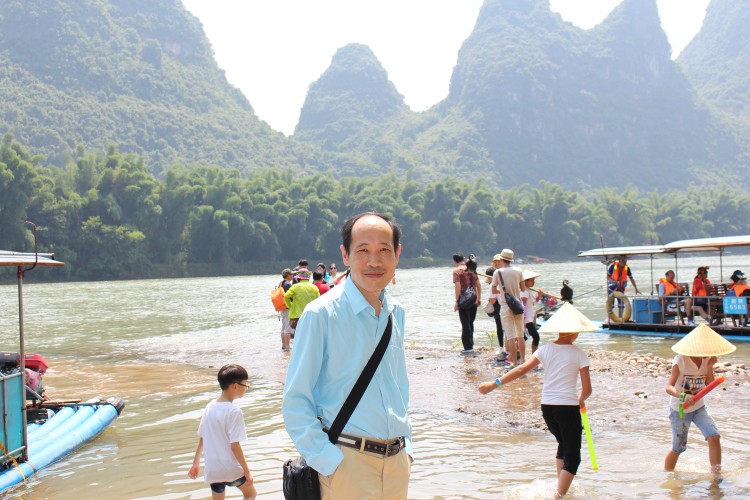
Overview of Guilin’s Terrain: A Natural Landscape of Mountains and Water
Guilin City is located in the southern part of Guangxi Province, surrounded by mountains on all sides, and belongs to a karst landform with uniquely shaped peaks and crags. The Li River flows through the city, and the jagged rocks and clustered peaks, together with the crisscrossing waterways, have led Guilin to be regarded since ancient times as a classic Feng Shui pattern of “mountains encircling and waters embracing the city,” embodying both the protective power of mountains and the dynamic vitality of flowing water.
This natural layout of “famous mountains guarding the city and a renowned river running through it” laid the Feng Shui foundation for Guilin’s urban siting and later expansion. In traditional Feng Shui, high mountains symbolize authority and backing, while rivers represent wealth and circulation; Guilin happens to possess the advantages of both, which is why it has long been seen as an important prefectural city in the south throughout different dynasties.

Jingjiang Princes’ Palace and Solitary Beauty Peak: The Heart of Guilin’s Dragon Vein
In the heart of Guilin stands the Jingjiang Princes’ Palace, which has a history of more than six hundred years and is even older than the Forbidden City in Beijing. Since its completion, the palace has always been regarded as the location of Guilin’s dragon vein, and in reality the city’s development has indeed spread outward in all directions around this royal city.
The backing mountain of the palace city is Solitary Beauty Peak, which rises to 216 meters high, with a cave at its base and a facing direction of 187 degrees. To its left lies the Li River, and to its right the Taohua (Peach Blossom) River, with distant hills embracing it on three sides, making it a genuine Feng Shui treasure site. Solitary Beauty Peak thrusts abruptly skyward like a vertical pillar piercing the heavens, serving both as the backing support of the royal city and as the “anchor point of the dragon vein” for Guilin’s entire mountain-and-water system.
From the perspective of configuration, there is an open bright hall (the river and flat land) in front, a reliable backing mountain (Solitary Beauty Peak) behind, and water courses on both sides providing protection (the Li River and Taohua River). Layer upon layer of distant mountains encircle the area, forming a pattern that aligns with the Form School ideal of “Vermilion Bird in front, Black Tortoise at the back, Azure Dragon to the left, and White Tiger to the right.”

Facing South in Period 8: A Timing Node for Guilin’s Prosperity
The palace city is oriented “sitting Zi facing Wu,” that is, sitting to the north and facing south. During Period 8 of the Lower Yuan (2004–2023), the prosperous flying star 8 arrives at the facing direction while the prosperous star 9 reaches the sitting position, allowing us to conclude that Guilin would enter a highly flourishing phase during these twenty years. Interestingly, after restoration work, the palace was reopened to the public in 2003, just one year before Period 8 began, marking a turning point in Guilin’s Feng Shui fortune.

From the perspective of time-based Feng Shui, the front-facing direction of the palace receives the prosperous star, indicating that the southern areas in front will experience especially notable development and popularity. The backing mountain receiving the future Period 9 star symbolizes that Guilin’s overall development will enjoy continuity and forward-looking momentum. This pattern of “receiving the Qi of the future at the back while drawing current prosperity at the front” is particularly advantageous for a tourism city.
Since then, the number of visitors to Guilin has increased year by year, reaching tens of millions annually. The Feng Shui principle of “right time, right place, right people” is vividly reflected in Guilin’s development trajectory: excellent natural conditions (right place), timing aligned with the luck cycle (right time), and supportive policies and tourism initiatives (right people) together have created Guilin’s flourishing situation.
Roads and Water Veins: Dragon Qi Advancing to Yangshuo
In the figure above, White Point 1 marks the backing mountain of the palace city, while Yellow Point 2 indicates the facing direction. Extending this line further, as shown in the next diagram, it reaches the entrance to highway G321. This road pushes the prosperous Qi of the facing direction southward, while the Li River on the left (which appears on the right to the reader in the diagram) also carries the thriving Qi southward. The intersection of these two lines is a small town—Yangshuo, famed as having scenery that rivals even Guilin’s.
From a Feng Shui standpoint, a highway functions like a “man-made water vein,” carrying flows of people, goods, and information, while the Li River is a natural water dragon. When both align with the palace city’s facing direction, it is as if the Qi of the royal city is being continuously transmitted downstream. Yangshuo lies precisely where this human-made dragon and water dragon meet, naturally able to receive and amplify the prosperous Qi coming from Guilin.
Empowered by this Feng Shui configuration, Yangshuo has, over the past decade, transformed into a nationally renowned tourism hub in China. Known for its unique karst landscape and international backpacker culture, the town can, within a Feng Shui framework, be seen as a “bright pearl that receives and reflects Guilin’s dragon Qi.” The Feng Shui of this small town will be discussed in detail in a separate article.
Lessons from Guilin’s Feng Shui: Landscape, Timing, and Human Planning
Looking at Guilin’s Feng Shui as a whole, several key elements clearly stand out: exceptional natural mountain-and-water formations, a sitting-and-facing layout that aligns with the prevailing time cycles, and the guidance of Qi through roads and urban planning. Natural mountains and rivers provide a strong Feng Shui foundation, but without subsequent development strategies and timely restoration and opening, this potential might not have been fully realized.
Jingjiang Princes’ Palace and Solitary Beauty Peak symbolize the core of Guilin’s dragon vein, while the Li River and major transport routes act like meridians that carry this Qi to more distant areas. Guilin and Yangshuo echo and support each other—one city and one town—forming a “twin stars shining together” pattern in the modern tourism landscape, which not only validates traditional Feng Shui theory but also showcases the vitality of a landscape city in the contemporary era.

Leave a Comment