
Feng Shui China, Feng Shui West
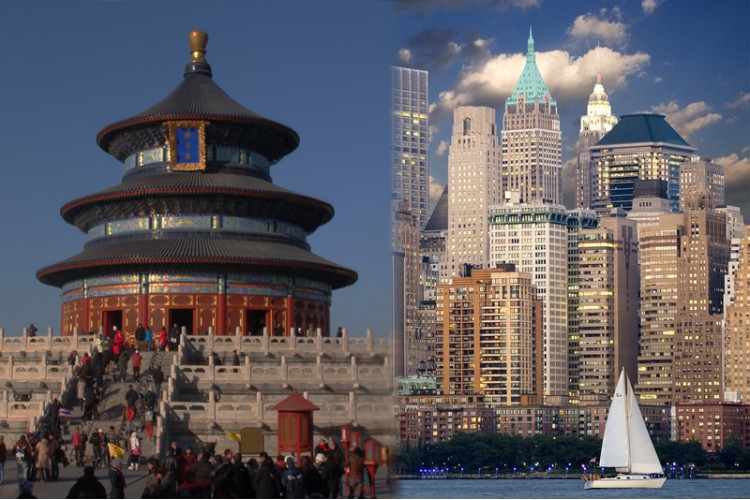
The Paradox: 3000-Year Tradition Called Superstition
An age-old teaching like Feng Shui is bound to clash with modern times and the new influences it brings: new approaches, new interpretations, new politics and new cultures introduced by increasing global exchange.
One major challenge today's Feng Shui meets is how to reconcile its multifarious contradictions: although Feng Shui has been an inalienable part of Chinese thought since the ancients devised the concept of Qi—which is also the basis of highly popular Traditional Chinese Medicine (TCM), acupuncture, and martial arts—Feng Shui is officially labeled "superstition" on China's Mainland, although hardly anyone would dare dispute or question its validity in private practice.
Historical Suppression: Cultural Revolution's War on Tradition
During Cultural Revolution (1966-1976), Feng Shui was classified among the "Four Olds" (Old Ideas, Old Culture, Old Customs, Old Habits) that needed eradication. Feng Shui masters were publicly beaten, their books burned, and their practices driven underground.
The Chinese Government viewed Feng Shui as antithetical to Marxist materialism and scientific socialism. Registering as a Feng Shui consultant remains illegal today, and advertising these services can lead to crackdowns. Yet this suppression created a thriving underground market where elite clients pay premium fees for discreet consultations.
"While the authority suppresses Feng Shui publicly, privately even high-ranking officials consult masters for career moves and building projects." – Observations from Feng Shui practitioners
Feng Shui Thrives in Chinese Diaspora: Taiwan, Hong Kong, Singapore
Through Taiwan, Hong Kong, Malaysia, and Singapore—where Feng Shui has flourished both academically and professionally—the practice began its global journey to the West. These regions preserved authentic lineages uninterrupted by political suppression.
Hong Kong exemplifies Feng Shui's practical power: Bank of China Tower's sharp edges were redesigned after complaints they "cut" the neighboring HSBC building's Qi. HSBC's headquarters features massive water features and escalators specifically positioned per Feng Shui principles. Even the city's airport and major hotels employ Feng Shui consultants.
Singapore's government integrates Feng Shui into urban planning. Taiwan hosts formal Feng Shui academies. These regions demonstrate Feng Shui as sophisticated environmental science, not mere superstition.
• Hong Kong: Feng shui is widely accepted and utilized by people.
• Taiwan: Academic Feng Shui research institutions
• Singapore: Government-approved urban Feng Shui
• Malaysia: Chinese business community standards
The Western Transformation: From Mystery to Mass Market
In the West, Feng Shui arrived with new and sometimes curious traits. All you need to do is conduct an internet search on the subject and you will easily find that it is hard to say which information—and most of all which source—is to trust.
At home in China, Feng Shui awaits official acceptance while abroad it has reached a different extreme—mass acceptance with an instant easy-to-use money-making esoteric twist. Western "Feng Shui" often reduces complex Qi dynamics to simple mirror placements and color choices, packaged as quick-fix prosperity cures.
Why China Labels Feng Shui "Superstition" Despite Universal Practice
Ideology Control: The Government maintains ideological purity by rejecting anything challenging materialist dialectics. Feng Shui's Qi concept implies invisible forces against atheism.
Excessive religious activities: Feng Shui's temple rituals and master-disciple lineages resemble organized religion, threatening state religion policy.
Superstitious elements: Some aspects of Feng Shui do indeed contain superstitious elements.
Yet reality contradicts policy: China's biggest property developers secretly employ Feng Shui masters. The 2008 Beijing Olympics Bird's Nest stadium positioning followed Feng Shui alignments. Even some latest megaprojects show Feng Shui considerations in their orientations.
Authentic Feng Shui vs Western Commercialization
| Aspect | China (Authentic) | Western Version |
|---|---|---|
| Qi Analysis | Complex mountain-water-form analysis | Simple remedy by Fengshui objects |
| Time Cycles | 20-year Flying Star calculations | "Lucky colors" of the month |
| Training | 20+ years master-apprentice | Commercial short courses |
| Purpose | Generational family harmony | Instant wealth manifestation |
Feng Shui's True Essence: Environmental Science, Not Fortune-Telling
China's "superstition" label ignores Feng Shui's sophisticated environmental principles: solar orientation, water flow dynamics, mountain protection patterns, and bio-energetic field theory. Modern science validates many Feng Shui observations:
- Bedroom orientation: North-facing bedrooms disrupt REM sleep (confirmed by geomagnetic studies)
- Water proximity: Improves property values and mental health (urban planning research)
- Building aspect ratios: Affect internal airflow and temperature regulation
- Site selection: Ancient Chinese avoided earthquake faults using terrain analysis
Feng Shui represents 3000+ years of Chinese environmental observation, suppressed politically but thriving culturally. While China officially rejects its heritage, the West often dilutes it commercially. May authentic feng shui ultimately continue peacefully—creating a beautiful skyline for the world.
Leave a Comment