
Feng Shui Classroom
Hello everyone, and welcome to my Feng Shui Classroom! Today, I would like to share a form of Sha Qi (negative energy) that is frequently encountered in Feng Shui: electricity pylons.
Why is this series called “Feng Shui New Form Sha”? It is because electricity pylons did not exist in traditional Feng Shui. This type of power-supply infrastructure only appeared in modern times. Electricity systems began to emerge around 1880, which means they have existed for only about 150 years. Compared with traditional Feng Shui, which has a history of more than a thousand years, the Sha Qi created by modern structures is therefore referred to as “New Form Sha”.
1. The Distribution and Five Elements of Electricity Pylons
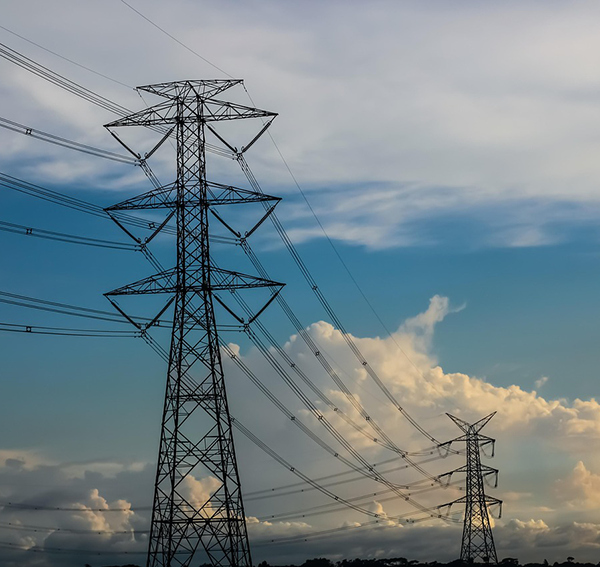
First of all, electricity pylons are most commonly found in rural or suburban areas and are less common in city centres. This is because electricity cables in urban areas are usually buried beneath the streets, while rural areas and large-scale power networks around the world have more high-voltage pylons.
So, what are the characteristics of an electricity pylon? Which of the Five Elements does it belong to?
- Five Elements: Metal: Electricity pylons are mainly made of steel structures, so their dominant element is Metal.
- Fire characteristics: Electricity pylons transmit electricity, and in the Five Elements concept, electricity can be regarded as Fire. Therefore, electricity pylons also carry Fire characteristics.
- Form Sha characteristics: An electricity pylon extends outward from its central structure, with many pointed angles, branches and intersecting metal frames. In Feng Shui, it can be regarded as a type of “Centipede Sha” or “Pointed Sha”.
In Feng Shui, the issue with electricity pylons is often not only about the Five Elements, but also about the sense of sharpness and pressure created by their appearance, as well as the psychological impact caused when they remain within one’s line of sight over a long period.
2. Debunking the Myth: Do Electricity Pylons Really Emit Strong Radiation?
One of the questions people care about most is: electricity pylons produce electromagnetic waves and radiation, so will they have a negative effect on the human body?
From a physical perspective, the electromagnetic fields produced by electricity pylons are extremely low-frequency electromagnetic fields. Generally speaking, if a residential property is more than about 100 metres away from an electricity pylon, the electromagnetic field will already be significantly weakened, and its impact on the daily living environment is relatively limited.
However, if the distance is very close, the situation needs to be assessed separately.
- Close-distance impact: For example, some detached houses, village houses or low-density residential properties may have electricity pylons very close to their windows, or even directly in front of the main entrance. Living with a pylon in close proximity for a long time can create pressure not only because residents worry about electromagnetic fields, but also because of the visual and psychological impact.
- Visual pressure: Electricity pylons have a complex, angular appearance with intersecting steel frames. If you see one every time you open a window, sit in the living room or stay in the bedroom, it can easily create a feeling of pressure, unease or irritability.
- Example from Hong Kong’s New Territories: For example, some residential areas around Kam Sheung Road in Yuen Long are near Tsing Long Highway and electricity pylon facilities. If a property is too close to these structures, residents’ concerns may come not only from electromagnetic fields, but also from noise, views, Form Sha and psychological pressure.
In fact, if you are far enough away from an electricity pylon—for example, if there is a highway, hillside, building or a large open space between you and it—the electromagnetic field is usually already very weak. By contrast, when using a refrigerator, microwave, induction cooker or hair dryer at home, these appliances are much closer to the body, so the electromagnetic field they produce may not necessarily be lower than that of a distant electricity pylon.
Therefore, from a Feng Shui perspective, we should pay more attention to whether: the electricity pylon is within one’s long-term living line of sight, whether its sharp angles directly face a window or main door, and whether it creates ongoing psychological pressure.
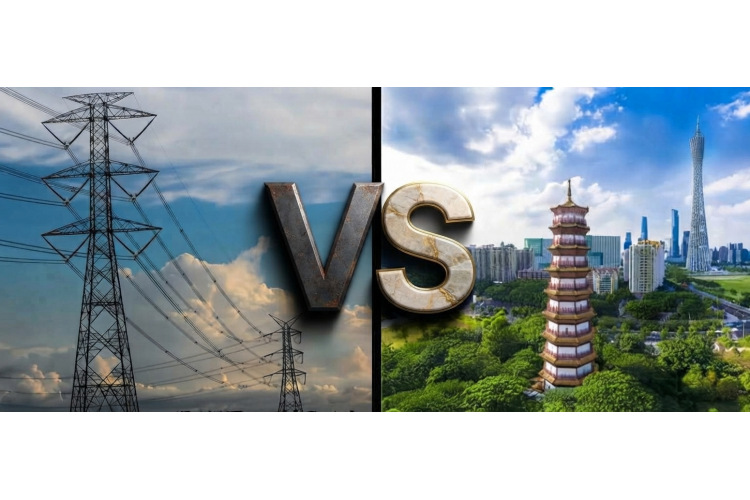
3. A Major Misunderstanding: An Electricity Pylon Is Definitely Not a “Wenchang Pagoda”!
Some people may ask: “This electricity pylon is pointed and tall. Is it the same as the ‘Wenchang Pagoda’ mentioned in traditional Feng Shui?”
The answer is: absolutely not.
Although both electricity pylons and Wenchang Pagodas have an upward-reaching appearance, their origins, symbolic meanings, Five Elements attributes and structures are completely different. They should not be confused with each other.
- The origin of the Wenchang Star: The Wenchang Pagoda in traditional Feng Shui originates from the concepts of the Wenchang Star and Wenqu Star. Both Wenchang and Wenqu are associated with writing, academic achievement, examinations, talents, learning ability and wisdom.
- Flying Stars and directions: In the Nine Palace Flying Stars system, the Four Green Star represents Wenqu, which is commonly known as the Wenchang position. The direction corresponding to the Four Green Wood Star is the Southeast in the Later Heaven Bagua.
- The true imagery of a Wenchang Pagoda: Wenchang benefits examinations, writing and talents, so it is symbolised by the shape of a writing brush. In earlier times, Feng Shui used upright, pointed mountain peaks—such as “Brush Rack Mountain”—as Wenchang imagery. Later, pagodas were built in layers, resembling the upward growth of a bamboo or the shape of a Chinese writing brush.
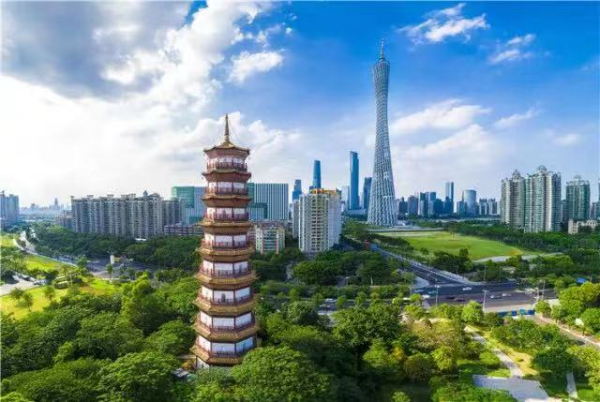
- Examples of historic buildings: For example, the Ming Dynasty Chigang Pagoda in Guangzhou, and the more than 600-year-old Tsui Sing Lau Pagoda in Ping Shan, Yuen Long, Hong Kong—now a declared monument—both reflect the upward, orderly and layered imagery emphasised by traditional Wenchang Pagoda architecture.
The Wenchang Pagoda belongs mainly to the Wood element, like a tree, bamboo or writing brush standing upright in the ground. It represents growth, literary talent and upward advancement. By contrast, an electricity pylon is made of steel, with Metal as its dominant element. Its structure is spread out, with intersecting supports and many sharp angles, making its nature completely different.
A Wenchang Pagoda grows upward in an orderly manner, symbolising literary talent, knowledge and academic success. An electricity pylon, however, is a metal structure extending outward, with sharp angles and a centipede-like form. It cannot be regarded as a Wenchang Pagoda.
4. Practical Ways to Resolve the Sha Qi of Electricity Pylons
If you can really see an electricity pylon very close to your window, and you have to face it every day, it can easily create psychological pressure. In Feng Shui, this may form a form of “Sha”. So, how can it be resolved?
1. If the Distance Is Far: Focus on Blocking the View
If the electricity pylon is relatively far away, there is no need to worry excessively about electromagnetic fields. The simplest and most direct solution is to use curtains, venetian blinds, sheer curtains, plants, screens, or to rearrange furniture so that the pylon does not remain within your main line of sight.
In particular, avoid placing beds, desks, sofas, dining tables or work areas in positions where people would face the electricity pylon for long periods. Simply reducing direct sightlines and visual pressure can already improve the living experience considerably.
2. If the Distance Is Close: Analyse the Flying Stars and Five Elements
If the electricity pylon is very close and directly faces a window, main door, balcony or room, you need to analyse the Flying Stars and Five Elements of that particular position.
For example, if the electricity pylon happens to fall in the home’s Four Green Wenchang position, it is worth paying attention. Since an electricity pylon belongs to the Metal element, while the Wenchang position belongs to Wood, it may create:
Metal overcoming Wood, causing the Wenchang energy to be suppressed
In traditional Five Elements theory, when the Wood energy of Wenchang is overcome by Metal, it may manifest as mental pressure, difficulty concentrating, reduced study efficiency, emotional instability, or an inability to fully express one’s talents. This is especially worth noting for households with students, or for people engaged in writing, creative work, design, education, research or other work requiring a high level of concentration.
3. Using Water-Grown Plants as a Remedy
If analysis confirms that the Metal energy of the electricity pylon is suppressing the Wood energy of Wenchang, it is not advisable to place random decorative objects. For example, simply placing a lucky bamboo without water may not achieve the desired effect.
A more suitable method is to place water-grown plants near the window, within the affected line of sight, or in the area influenced by the Sha Qi. Importantly, the plants must be grown in water.
The principle is based on the generating cycle of the Five Elements:
Metal generates Water, and Water generates Wood.
Using water as a bridging element, the Metal energy of the electricity pylon can be transformed into Water energy, which then supports and strengthens the Wood energy of the Wenchang position. This method is not based merely on the appearance of an ornament, but on adjusting the relationship of the Five Elements according to their generating and overcoming cycles.
However, the most important aspect of Feng Shui remedies is still to analyse the property’s actual facing direction, window positions, external environment, Flying Star distribution and the residents’ needs. Do not blindly place objects simply because you can see an electricity pylon.
Want to Learn More About Feng Shui?
If you enjoyed this article, please subscribe to my YouTube channel to learn more practical and accurate knowledge about modern home Feng Shui!
Subscribe to Master Feng Ip’s Feng Shui Classroom Channel
Leave a Comment