

For most people, the bedroom is the space where they spend the most time every day, and it is also the place that most directly affects rest, health and relationship luck. Therefore, bedroom Feng Shui is extremely important within overall home Feng Shui. A well‑designed bedroom Feng Shui layout can help you sleep better, stabilise emotions, harmonise relationships, and even indirectly support career and wealth.
1. Core Concepts of Bedroom Feng Shui
Many people think the main focus of the home is the living room or entrance, but in reality, the bedroom is the space that accompanies you the longest every day and most closely influences your personal state. Good bedroom Feng Shui should make you feel naturally relaxed and at ease the moment you enter, rather than pressured, cluttered or emotionally tense.
- The bedroom belongs to the “rest and recovery” type of space, with stability, quietness and privacy as priorities.
- Layout focuses mainly on three elements: the bed position, doors and windows, and storage.
- Within overall home Feng Shui, the bedroom directly influences mental state, health and relationship luck.
2. Common Bedroom Feng Shui Taboos (including Beam Sha)
The following are the most common taboos in practice and must be given priority when dealing with bedroom Feng Shui. If you can check and improve them one by one, the overall bedroom Feng Shui will already improve significantly.
- Bedhead without support, sleeping against a window: The bedhead should ideally be against a solid wall, symbolising backing and security. A bedhead against a window or floating in space easily leads to restless sleep, wandering thoughts, and a sense of having no support in relationships and career.
- Door facing the bed, door rushing the bed: When opening the bedroom door you directly face the bed, or the end of the bed faces the door, this is called “door rushing the bed”. In home Feng Shui it is a common Sha. Over time it can lower sleep quality and easily cause sudden waking, nervousness and a lack of security.
- Mirror directly facing the bed: Wardrobe mirrors, full‑length mirrors or dressing mirrors facing the bed are regarded in bedroom Feng Shui as disturbing rest and affecting marital harmony. At night you may also be startled by your own reflection. It is better to move the mirror or cover it with a cabinet door when not in use.
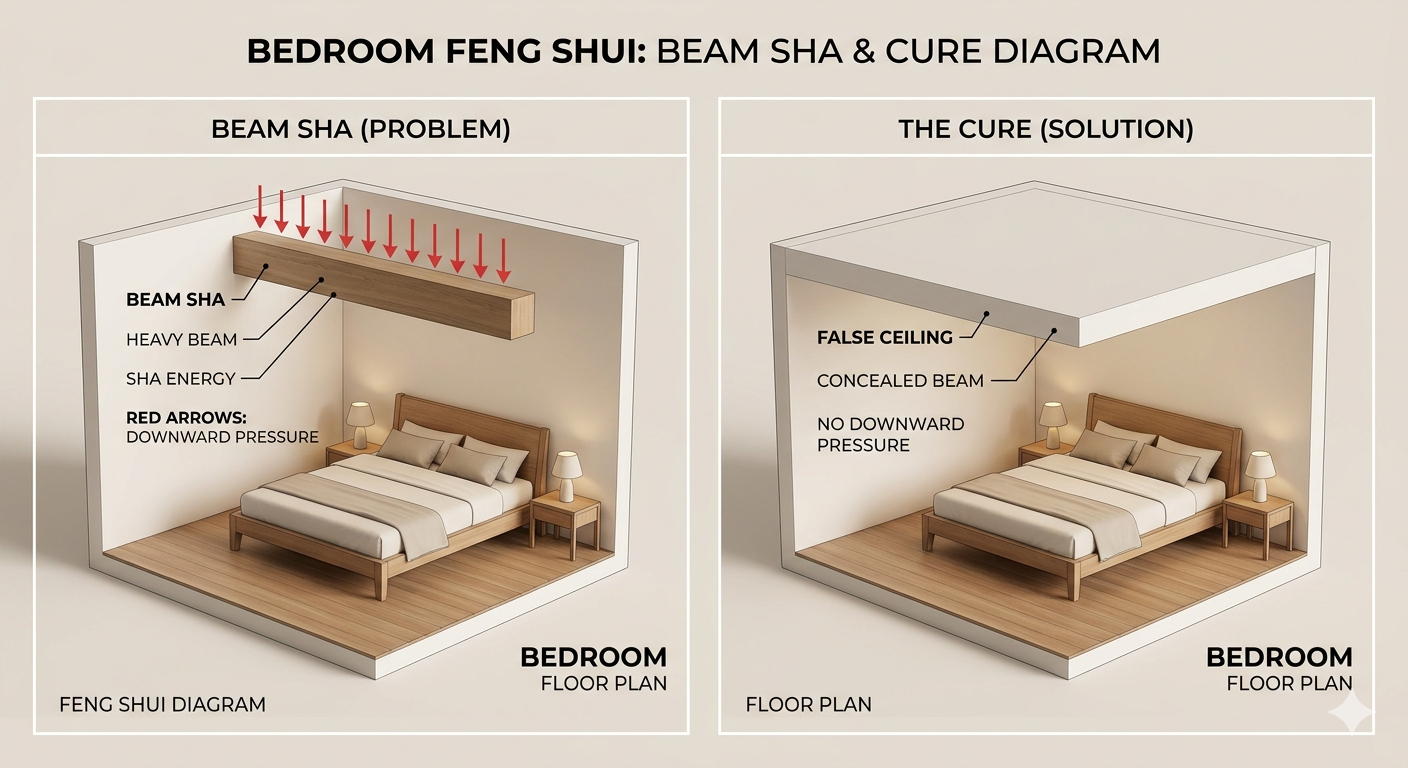
- Beam Sha (beam pressing the bed): A beam directly above the bed is a classic form of Beam Sha. Sleeping under a beam for a long time easily creates feelings of pressure, shoulder and neck pain, headaches, and symbolically represents being suppressed and unable to “lift your head” in life. If possible, move the bed away from under the beam. If space is limited and the bed cannot be moved, you may use renovation to hide the beam, lower the ceiling, or combine suitable Feng Shui items to help dissolve the Sha.
- Too many electrical appliances and clutter: Piling electronic devices or clutter beside the bed not only affects sleep quality, it also makes the overall bedroom Feng Shui appear chaotic and the Qi stagnant. Keeping the bedside and under‑bed area clean and free of junk will greatly help both sleep and luck.
3. Practical Layout Tips to Improve Bedroom Feng Shui
After avoiding obvious taboos, you can make some simple adjustments to stabilise and smooth out bedroom Feng Shui, laying a solid foundation for overall home Feng Shui.
1. Choosing and Positioning the Bed
- Prioritise a position that is away from the door but still allows you to see it, so you are not directly rushed by the door yet have a sense of “commanding the entrance”.
- Keep the bedhead against a solid wall, and avoid placing it against a window or with no support on either side.
- Leave walking space on both sides of the bed, which is beneficial for relationships and social connections.
2. Light and Ventilation
- Maintain a reasonable amount of natural light, and at night use soft, warm‑toned lighting to help relax emotions.
- Avoid strong light directly shining on the bed (such as too‑thin curtains or spotlights aimed at the bed), which can disturb stable sleep.
- Smooth air circulation helps stabilise the Qi in the bedroom Feng Shui.
3. Colours and Décor
- Bedroom colours are best kept soft and natural, such as off‑white, light wood, pale pink or light grey.
- Avoid large areas of overly stimulating red, orange or neon colours, which tend to create emotional ups and downs and make it hard to relax.
- Choose artwork with gentle, positive and pleasant themes; avoid violent, overly abstract or heavy subjects.
4. Making Good Use of Feng Shui Items and Five‑Element Layouts
Only after the basic layout and storage are in good order is it recommended to add Feng Shui items as support. The key is not “the more the better” but placing them in the right spots with the right elements.
- First understand the favourable Five Elements in your own Ba Zi (for example, favouring water, wood or fire), then adjust in line with your bedroom Feng Shui.
- According to your Ba Zi chart and favourable Five Elements, place suitable Feng Shui items such as vases, An Ren Water, gourds or wind chimes in appropriate directions to strengthen certain aspects of your luck.
- For example, to stabilise health you may place a gourd in a suitable position; to reduce quarrels and ease emotions, you may consider An Ren Water.
- The focus is to “treat the right issue” rather than placing items randomly; otherwise it is easy to get the opposite of what you want.
5. Bedroom Feng Shui Focus for Different Situations
The purpose and needs of each family member’s room are different, so when adjusting bedroom Feng Shui, you can fine‑tune according to the person.
1. Bedroom Feng Shui for Single People
- Keep both sides of the bed accessible, symbolising that there is still space in life to welcome a partner.
- Avoid having only one bedside table or only one side walkway, which easily forms a “habit of being alone” and symbolises a singular relationship pattern in home Feng Shui.
2. Bedroom Feng Shui for Couples
- Using a pair of bedside tables is ideal, symbolising equality and mutual support.
- Avoid keeping too many work‑related or stress‑inducing items (such as piles of documents or equipment) in the bedroom, so you do not bring pressure into the relationship space.
3. Bedroom Feng Shui for the Elderly or Children
- Prefer locations in the home that are relatively quiet and away from noise.
- Avoid placing the bed too close to the door or window to reduce startle and instability.
- Layout should prioritise safety, stability and fewer sharp corners.

6. Summary: Start with Tidying the Bedroom to Build a Solid Home Feng Shui Foundation
To improve bedroom Feng Shui, you do not necessarily need major renovations. Often you only need to:
- First deal with obvious taboos (door rushing the bed, Beam Sha, mirrors facing the bed, etc.);
- Then clear clutter, adjust the bed position, and improve light and ventilation;
- Finally, add suitable Feng Shui items in moderation according to your personal Ba Zi favourable Five Elements.
This is enough to lay a solid foundation for overall bedroom Feng Shui, helping you rest more soundly and feel more at ease, while also creating better underlying support for career and relationships.
Want to Check Whether Your Bedroom Feng Shui Has Issues Based on Your Home Layout?
If you are planning to move or renovate, or have been sleeping poorly and feeling heavy pressure for a long time, you may start with a bedroom Feng Shui check to see whether bed position, doors and windows, beams and mirrors are affecting your luck and health.
- Analyse the main bedroom layout using floor plans and on‑site photos
- Combine your favourable Ba Zi Five Elements to suggest suitable layouts and Feng Shui items
- Begin with adjusting the bedroom, then gradually improve overall home Feng Shui
Leave a Comment